Please fill out the form below to request a quote or to request more information about us. please be as detailed as possible in your message, and we will get back to you as soon as possible with a response. we're ready to start working on your new project, contact us now to get started.
Your One-Stop Chemical Solvent Supply Expert - Richnow Chem
Why the Demand for Diethyl Carbonate is Surging in Green Tech
2026-06-13
Richnow Chem
30
Diethyl carbonate (DEC), an ester of carbonic acid and ethanol with the formula OC(OCH2CH3)2, is a key component in a wide range of applications, especially in green technology. Its unique properties and versatility make it a critical ingredient in the development of environmentally friendly solutions across industries. This article explores why the demand for diethyl carbonate is surging, particularly in green technology, highlighting its production methods, uses, and the advantages of high-purity DEC suppliers like Richnow Chem.
What is Diethyl Carbonate?
Definition and Basic Properties
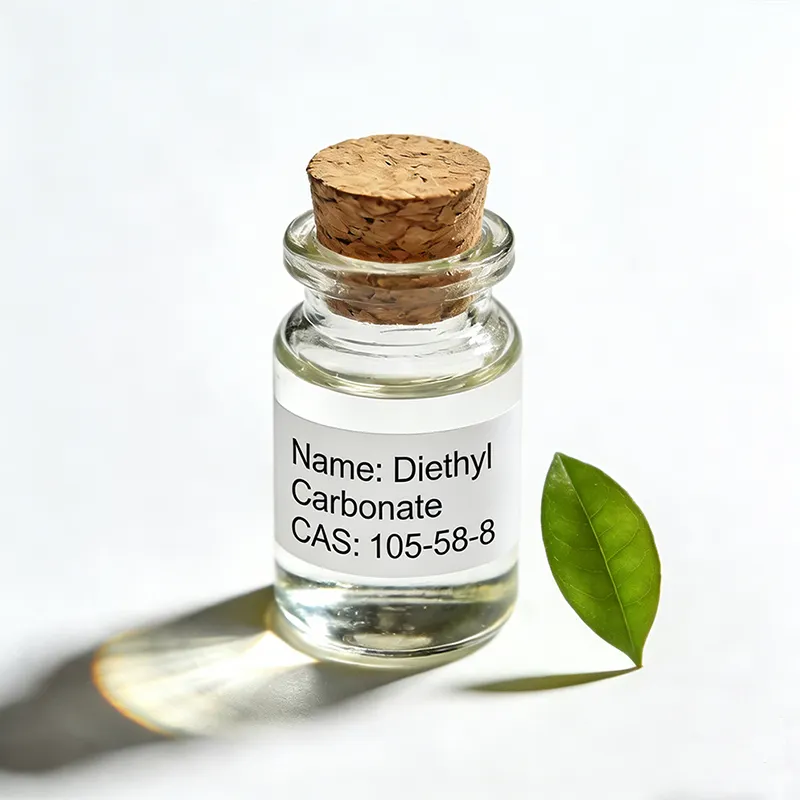
Diethyl carbonate, often abbreviated as DEC, is a colorless liquid at room temperature (25 C) with a low flash point. It has a molecular formula of OC(OCH2CH3)2, which sets it apart as an ester. This ester is notable for its low toxicity and minimal environmental impact, making it an ideal candidate for eco-friendly applications.
Production Methods
Diethyl carbonate can be produced through various methods, each with its own advantages and limitations. Here are some of the key production processes:
Phosgenation Reaction with Phosgene and Ethanol
One of the primary methods involves the phosgenation reaction, which combines phosgene (COCl2) and ethanol (CH3CH2OH) to form diethyl carbonate and hydrochloric acid (HCl):
[ 2 CH3CH2OH + COCl2 (CH3CH2O)2CO + 2 HCl ]
This method is widely used due to its efficiency and high yield. However, it involves the use of phosgene, which is a highly reactive and toxic compound, making the process more complex and requiring stringent safety measures.
Ethanolysis of Urea
An alternative method involves the ethanolysis of urea. This process requires a heterogeneous catalyst, such as various metal oxides, to act as both a Lewis acid and a base. The reaction proceeds via the formation of ethyl carbamate as an intermediary:
[ 2 CH3CH2OH + CO(NH2)2 (CH3CH2O)2CO + 2 NH3 ]
This method is less common but offers a safer alternative to phosgene-based production.
Direct Synthesis from Carbon Dioxide and Ethanol
Another approach involves the direct synthesis of DEC from carbon dioxide (CO2) and ethanol, which can be done through various methods. This process is more environmentally friendly due to the use of CO2 as a raw material, reducing the reliance on toxic compounds like phosgene. This method can also involve oxidative carbonylation with carbon monoxide, further enhancing the production process.
Transesterification from Dimethyl Carbonate
Yet another method involves the transesterification reaction from dimethyl carbonate (DMC). This process is simpler and can be easily scaled up for industrial production. The reaction produces DEC and methanol as by-products:
[ (CH3O)2CO + CH3CH2OH (CH3CH2O)2CO + CH3OH ]
This method is increasingly favored due to its efficiency and reduced environmental impact.
Ethyl Nitrite and Carbon Monoxide Reaction
Another method involves the reaction of ethyl nitrite and carbon monoxide, which requires a catalyst like palladium. This process is complex but can be adapted for large-scale production.
Overview of Industrial-Scale Production
Industrial-scale production of DEC typically involves one or more of these methods, often chosen based on cost efficiency, environmental impact, and safety considerations. The choice of production method can significantly influence the quality and purity of the final product, making it crucial to select a reliable and efficient process.
Uses in Green Tech
Battery Electrolyte Component
One of the most significant applications of diethyl carbonate in green technology is as an electrolyte component in lithium batteries. DEC is a critical component in the formulation of electrolytes, which are essential for the functioning of lithium-ion batteries. Its high dielectric constant and low viscosity make it a preferred choice for enhancing the performance and stability of battery electrolytes.
Richnow Chem, with its 30-year expertise in solvent manufacturing, provides high-purity DEC suitable for use in battery electrolytes, ensuring superior performance and longevity of lithium-ion batteries.
Fuel Additive to Support Cleaner Diesel Fuel Combustion
Another prominent use of DEC is as a fuel additive in diesel engines. By adding DEC to diesel fuel, it can help support cleaner combustion processes, reducing emissions of volatile organic compounds (VOCs), CO2, and particulates. The high boiling point of DEC helps reduce the volatility of the blended fuels, minimizing vapor buildup in warm weather that can block fuel lines.
Richnow Chem's high-purity DEC ensures that the fuel additive performs optimally, providing clean and efficient fuel combustion.
Other Applications in Green Tech
DEC also finds use in various other applications, such as laboratory chromatography resins. DEC solutions at 0.01% v/v can be used as a relatively gentle cold sterilizing reagent, making it ideal for applications in laboratory settings where gentle sterilization is required. Additionally, DEC can be used in pharmaceuticals as a solvent or vehicle for drug delivery, particularly in intramuscular injections.
Richnow Chem's extensive experience in solvent manufacturing and quality control ensures that DEC meets the highest standards in these applications, making it a trusted choice for green technology solutions.
Environmental Benefits
Reduction of Volatile Organic Compounds (VOCs)
The use of DEC as a fuel additive can significantly reduce the emission of volatile organic compounds (VOCs), which are major contributors to air pollution. By adding DEC to diesel fuel blends, it assists in stabilizing the fuel and reducing the volatility of the mixture, leading to cleaner combustion and lower emissions.
Minimizing Vapor Buildup and Particulate Emissions
The high boiling point of DEC helps in minimizing vapor buildup in warm weather conditions, reducing the risk of vapor lock in fuel lines. This is particularly important in diesel engines, where vapor lock can lead to poor performance and increased particulate emissions. DEC's use in fuel additives helps maintain optimal fuel stability, ensuring cleaner combustion and reduced particulate emissions.
Cold Sterilizing Reagent for Laboratory Chromatography Resins
0.01% v/v DEC solutions are used as a cold sterilizing reagent for laboratory chromatography resins, providing a gentle yet effective sterilization method. This application highlights DEC's role in maintaining laboratory hygiene and ensuring the purity of analytical samples.
Market Trends and Growth
Increasing Demand Across Industries
The demand for diethyl carbonate is rapidly increasing across various industries, driven by a growing need for environmentally friendly solutions. The rise of green technology initiatives and the push for cleaner fuels and batteries have led to a surge in the demand for DEC.
Role of High-Purity Dec Suppliers
High-purity DEC suppliers like Richnow Chem play a crucial role in meeting the growing demand. Richnow Chem's commitment to providing high-quality DEC ensures that customers receive a consistent and reliable product, supporting their green technology initiatives.
Richnow Chem's Role and Market Position
Shandong Richnow Chemical Co., Ltd., a part of the Richnow Group with a 30-year history, is a leading supplier of high-purity DEC. Leveraging the group's robust capital and strategic support, Richnow Chem integrates industry chain advantages to provide top-quality DEC products. Richnow Chem's expertise and quality control measures ensure that customers receive a product that meets the highest standards, making it a trusted choice in the industry.
With a focus on innovation and sustainability, Richnow Chem continues to develop new applications and improve the quality of DEC, positioning itself as a leader in green technology solutions.
Conclusion
In conclusion, the demand for diethyl carbonate is surging in green technology due to its unique properties and versatility. Richnow Chem's high-purity DEC products are at the forefront of this trend, providing reliable and efficient solutions across industries. Whether as an electrolyte component in lithium batteries, a fuel additive for cleaner combustion, or a cold sterilizing reagent for laboratory applications, DEC's benefits are clear and significant. Richnow Chem's expertise and commitment to quality make it a trusted supplier in the green technology space, ensuring that customers receive the best solutions for their needs.
Table of Contents
GET IN TOUCH WITH Us
We specialize in providing chemical solvents and services for all industries.
Useful Links
Products
Contact Us
Contact Person: Guan Na
Phone Number: 86-13205415284
WhatsApp: 86-13205415284
Email: sales@richnowchem.com
Company Address: Room 1607, Block A, Rongsheng Plaza, No. 9, Beiyuan Avenue, Licheng District, Ji'nan City, Shandong, China